
Should Your Knees Go Over Your Toes When You Squat?
A Science-Based Guide to Squat Technique, Knee Position, and Joint Health
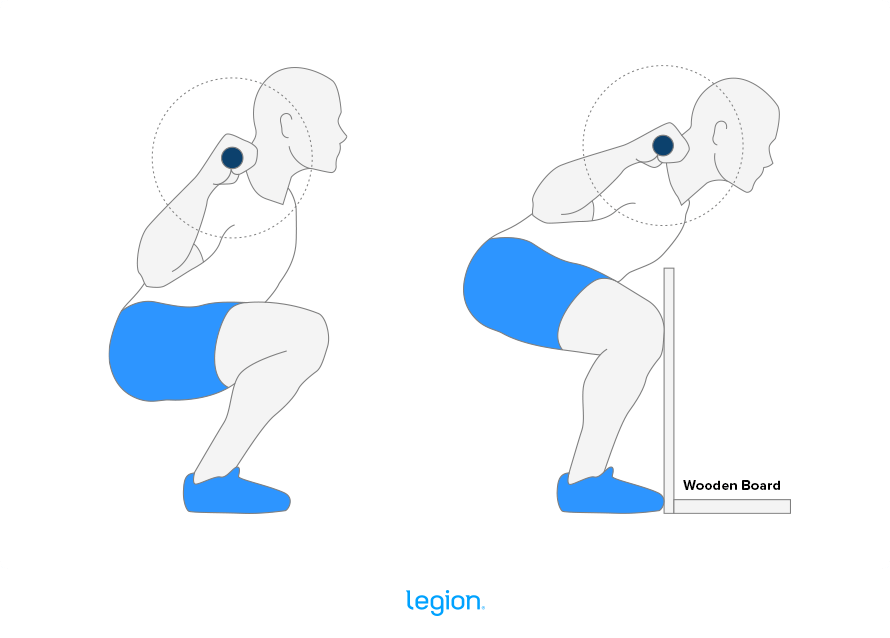
One of the most common questions in strength training is whether your knees should move beyond your toes when you squat.
Some people believe that allowing the knees to travel forward puts too much pressure on the knee joints and increases the risk of injury. Others argue that deliberately keeping the knees behind the toes can place unnecessary stress on the hips and lower back.
So, what is the correct approach?
In this guide, we will explore what research says about knee position during squats, explain how to improve your technique, and share practical tips for making your workouts safer and more effective.
Table of Contents
1. Should Your Knees Go Over Your Toes When You Squat?
Yes. For many people, allowing the knees to move beyond the toes during a squat is normal and does not automatically mean the movement is dangerous.
The knees naturally move forward during many squat variations. How far they travel depends on several factors, including your body proportions, ankle mobility, hip structure, stance, and squat technique.
Trying to prevent all forward knee movement can change how your body distributes the forces involved in the exercise. Instead of focusing on keeping your knees behind your toes, focus on maintaining balance, control, and comfortable movement.
2. What Does Scientific Research Say?
The debate about knees going over the toes became popular partly because of an older study published in 1974.
The study suggested that greater forward knee movement during squatting could increase shear forces on the knee joint. However, it had important limitations, including a very small sample and incomplete information about squat depth and technique.
The University of Memphis Study
Researchers at the University of Memphis compared two versions of the back squat:
- Unrestricted squat: Participants were allowed to move their knees forward naturally.
- Restricted squat: A wooden board prevented the knees from moving beyond the toes.
The findings showed that allowing the knees to move beyond the toes increased knee torque from approximately 117 to 150 Newton-meters, an increase of around 28%.
However, restricting forward knee movement increased hip torque from approximately 28 to 302 Newton-meters in the study, a much larger relative increase.
This suggests that reducing stress on one joint can shift some of the mechanical demands to another joint.
Another study discussed in the original article found that restricting forward knee movement could also increase stress on the lower back.
The reported joint forces in these studies were considered within acceptable ranges for the participants. These findings do not mean that every squat variation is suitable for every person, especially someone experiencing pain or recovering from an injury.
3. Keep Your Entire Foot on the Floor
One important part of a stable squat is maintaining contact between your feet and the floor.
Although your knees can move beyond your toes, your heels should not lift off the ground during a standard squat. Your weight should remain balanced around the middle of your feet.
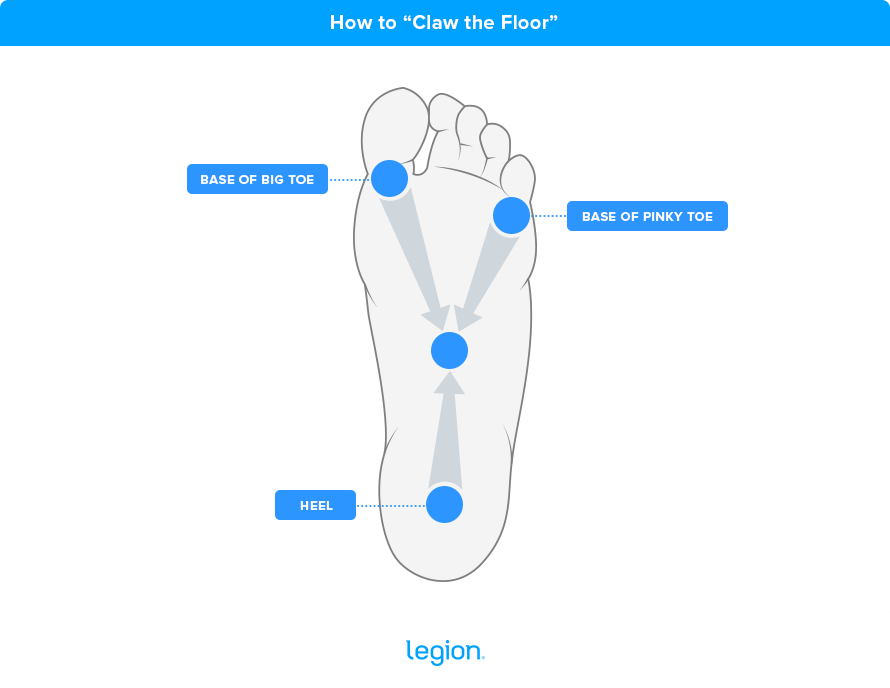
Try the "Claw the Floor" Technique
This technique helps you create a stable base before starting your squat.
- Stand with your feet around shoulder-width apart, adjusting your stance to what feels comfortable.
- Point your toes slightly outward if that suits your natural position.
- Keep your big toe, little toe, and heel connected to the floor.
- Imagine gently gripping the floor with your feet.
- Maintain this stable position as you lower and raise your body.
4. Keep Your Knees Aligned With Your Toes
Another important aspect of squat technique is knee alignment.
During a squat, your knees should generally move in the same direction as your toes. Avoid allowing them to collapse excessively inward, especially when the movement becomes difficult.
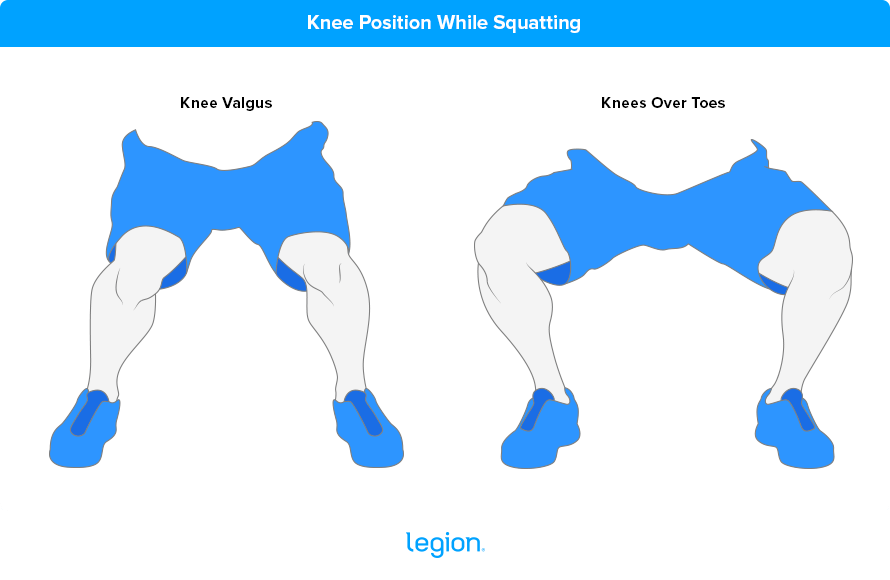
What Is Knee Valgus?
Knee valgus describes a movement pattern in which the knees move inward toward each other. This can affect movement mechanics and may be associated with increased injury risk in some situations.
How to Improve Knee Alignment
- Keep your feet firmly planted.
- Allow your knees to follow the direction of your toes.
- Avoid excessive inward knee movement.
- Use a weight that allows you to maintain control.
- Practice the movement with lighter loads before increasing resistance.
5. How Deep Should You Squat?
There is no single squat depth that is perfect for everyone. Your comfortable range of motion depends on factors such as hip anatomy, ankle mobility, flexibility, and training experience.
In general, using a comfortable and controlled range of motion is a good starting point. Deeper squats can train muscles through a longer range of motion and may offer advantages for muscle development when performed comfortably.
Three Common Squat Depths
Partial Squat
You lower your body through a relatively short range of motion. This may be useful in some training situations or when a deeper position is uncomfortable.
Parallel Squat
Your thighs reach approximately parallel to the floor. This is a common squat depth used in strength training.
Deep Squat
You lower your hips below the level of your knees, as far as your comfortable mobility allows while maintaining control.
Research discussed in the original article suggests that squat depth does not necessarily create a simple increase or decrease in knee stress. Deeper squats can provide a longer range of motion for muscle training, but the depth should suit your body and abilities.
6. Common Squat Mistakes to Avoid
1. Lifting Your Heels
Allowing your heels to lift can shift your balance forward. Work on maintaining a stable foot position and use a comfortable range of motion.
2. Allowing Your Knees to Collapse Inward
Pay attention to knee alignment, particularly when standing up from the bottom of the squat.
3. Using Too Much Weight
Excessive weight can make it difficult to maintain control and consistent technique. Choose a load that matches your current ability.
4. Forcing Your Squat Depth
Trying to squat deeper than your comfortable range can cause unnecessary discomfort. Build mobility and strength gradually without forcing the movement.
5. Moving Too Quickly
Performing repetitions too quickly can make it harder to control your position. Use a steady, controlled movement instead of rushing through each repetition.
7. Proper Squat Technique Checklist
Use this simple checklist when practicing your squat:
| Technique Point | What to Focus On |
|---|---|
| Foot position | Keep your whole foot stable on the floor. |
| Stance | Choose a comfortable foot width and angle. |
| Knee movement | Allow natural forward movement. |
| Knee alignment | Keep knees generally tracking in the direction of your toes. |
| Squat depth | Use a comfortable, controlled range of motion. |
| Weight selection | Choose a load you can control with good technique. |
| Movement speed | Lower and rise with control. |
8. Frequently Asked Questions
Is it bad if my knees go over my toes when I squat?
No. Forward knee movement is a normal part of many squats. It is not automatically dangerous when performed with appropriate control and a suitable load.
Should I always keep my knees behind my toes?
No. Forcing your knees to stay behind your toes can change how forces are distributed across your hips and lower back. Allow natural movement instead.
Should my heels stay on the floor during squats?
During a standard squat, maintaining contact between your heels and the floor helps create a stable base. Your weight should remain balanced across your feet.
Why do my knees move inward when I squat?
This can happen because of movement habits, fatigue, load, or difficulty controlling the movement. Reduce the weight if necessary and practice keeping your knees aligned with your toes.
Is a deep squat better for building muscle?
A comfortable deeper range of motion can help train muscles through a longer movement range. However, you should not force depth that causes pain or prevents good technique.
Can I squat if my knees hurt?
It depends on the cause and severity of the pain. Do not push through sharp or worsening pain. Consider a healthcare professional or physiotherapist for an assessment and suitable exercise modifications.
Final Thoughts
So, should your knees go over your toes when you squat?
For many people, yes. Allowing the knees to travel forward naturally is a normal part of the squat, and trying to prevent all forward movement is not necessary.
Instead, focus on keeping your feet stable, maintaining good knee alignment, choosing a comfortable squat depth, and using a weight you can control.
Good technique is not about forcing your body into one rigid position. It is about finding a movement pattern that is controlled, comfortable, and appropriate for your body.
Train with control, build strength gradually, and give your body time to adapt!
Scientific References
- Ariel, B. G. (1974). Biomechanical analysis of the knee joint during deep knee bends with heavy load. Read study.
- Fry, A. C., Smith, J. C., & Schilling, B. K. Effect of knee position on hip and knee torques during the barbell squat. PubMed.
- Hartmann, H., Wirth, K., & Klusemann, M. (2013). Analysis of the load on the knee joint and vertebral column with changes in squatting depth and weight load. Read study.
- Flores, V., Becker, J., Burkhardt, E., & Cotter, J. (2020). Knee Kinetics During Squats of Varying Loads and Depths in Recreationally Trained Women. Read study.
This article is for educational purposes and is not a substitute for individualized medical or physiotherapy advice.



0 Comments