
The Best Muscle Groups to Workout Together: A Complete Guide for Women
Not sure which muscle groups to train on the same day? Discover how to organize your workouts, choose a training split, and build a balanced routine that supports muscle growth, strength, and recovery.
Training focus: Muscle Building · Strength · Workout Planning · Recovery

Planning a strength-training routine can feel confusing, especially when you are trying to decide which muscle groups belong together in the same workout.
Some people prefer training muscles that work together, such as the chest and triceps. Others prefer combining opposing muscle groups, such as the chest and back. Another approach is to organize workouts around major compound exercises.
The truth is that there is no single muscle-group combination that is best for everyone. The right structure depends on your goals, how many days you can train, your training experience, and how well you recover between sessions.
In this guide, you will learn about the six major muscle groups, how to organize them into effective workouts, and how to choose between 3-day, 4-day, and 5-day training schedules.
Table of Contents
1. What Are the Major Muscle Groups?
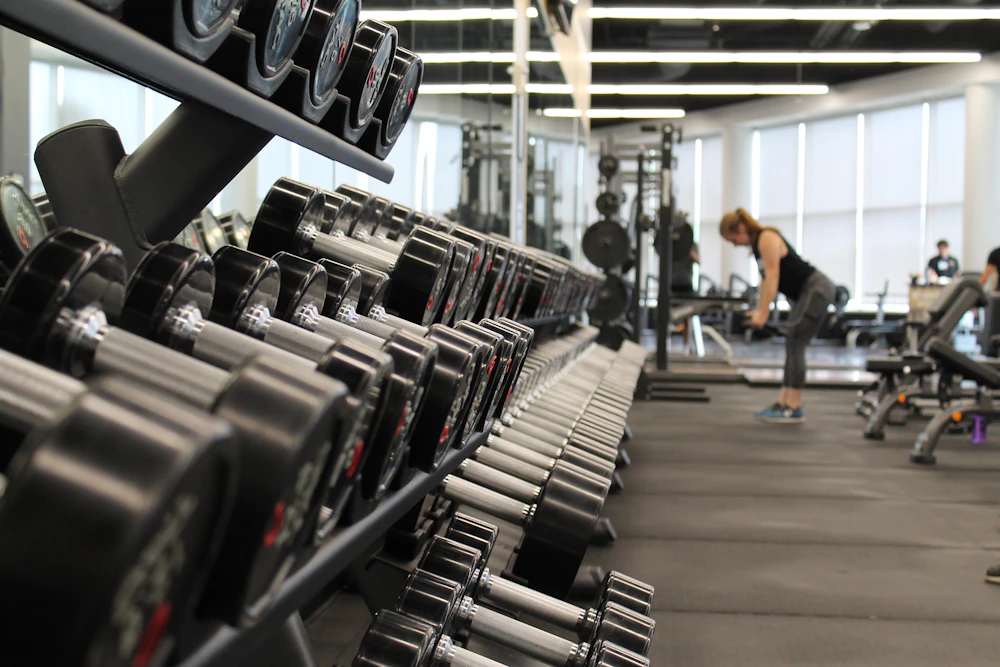
A muscle group is a collection of muscles that work together to perform movements or support particular functions in the body.
For strength-training purposes, the body is often divided into six major muscle groups:
- Chest: The muscles responsible for many pushing movements.
- Back: Muscles involved in pulling movements and upper-body stability.
- Shoulders: Muscles that help move and stabilize the arms.
- Legs: The muscles of the thighs, hips, and lower legs.
- Arms: The biceps, triceps, and forearm muscles.
- Core: Muscles around the abdomen and trunk that help stabilize the body.
Understanding these groups makes it easier to plan workouts and avoid repeatedly training the same muscles without enough recovery.
2. Major Muscle Group #1: Chest

The main muscle of the chest is the pectoralis major, commonly called the pecs. It is involved in pushing movements and helps bring your arms across the front of your body.
Best Chest Exercises
- Barbell bench press
- Dumbbell bench press
- Incline dumbbell press
- Push-ups
- Cable chest fly
- Machine chest press
Muscle Groups That Can Be Trained With Chest
Chest exercises also involve the triceps and front deltoids. This makes chest and triceps a common workout combination.
You can also combine chest with shoulders or include chest exercises in an upper-body session.
3. Major Muscle Group #2: Back

Your back contains several important muscle groups that work together to move your shoulders, arms, and spine.
The main muscles include:
- Trapezius: Helps control and move the shoulder blades.
- Rhomboids: Assist with pulling the shoulder blades together.
- Latissimus dorsi: The large muscles along the sides of your back.
- Erector spinae: Help support and extend the spine.
- Teres major and minor: Assist with shoulder movement.
- Infraspinatus: Helps rotate and stabilize the shoulder.
Best Back Exercises
- Lat pulldown
- Pull-ups or assisted pull-ups
- Seated cable row
- One-arm dumbbell row
- Barbell bent-over row
- T-bar row
- Chest-supported row
Muscle Groups That Can Be Trained With Back
Back workouts commonly include biceps because the biceps assist during many pulling exercises. Back and biceps is therefore a popular training combination.
You can also train back with chest in an upper-body workout or combine it with shoulders depending on your weekly schedule.
4. Major Muscle Group #3: Shoulders

Your shoulder muscles, known as the deltoids, are divided into three main sections or heads.
- Anterior deltoid: The front shoulder.
- Lateral deltoid: The side shoulder.
- Posterior deltoid: The rear shoulder.
Each section contributes to different arm movements. Training all three helps develop balanced shoulder strength.
Best Shoulder Exercises
- Dumbbell shoulder press
- Machine shoulder press
- Dumbbell lateral raise
- Cable lateral raise
- Reverse pec deck
- Face pulls
- Rear delt fly
Muscle Groups That Can Be Trained With Shoulders
Shoulders are often trained with chest and triceps in a push workout. They can also be included in an upper-body session or trained with back and biceps depending on your routine.
5. Major Muscle Group #4: Legs

The legs contain some of the largest muscles in the body. Training them helps develop lower-body strength, stability, and muscular development.
The major lower-body muscle groups include:
- Quadriceps: The muscles at the front of your thighs.
- Hamstrings: The muscles at the back of your thighs.
- Glutes: The muscles around your hips and buttocks.
- Calves: The muscles at the back of your lower legs.
Best Leg Exercises
- Squats
- Leg press
- Romanian deadlift
- Walking lunges
- Leg extensions
- Leg curls
- Hip thrusts
- Standing calf raises
Muscle Groups That Can Be Trained With Legs
Leg workouts can include all major lower-body muscles in one session. Calves can also be trained alongside legs or added to another workout when your schedule allows.
6. Major Muscle Group #5: Arms
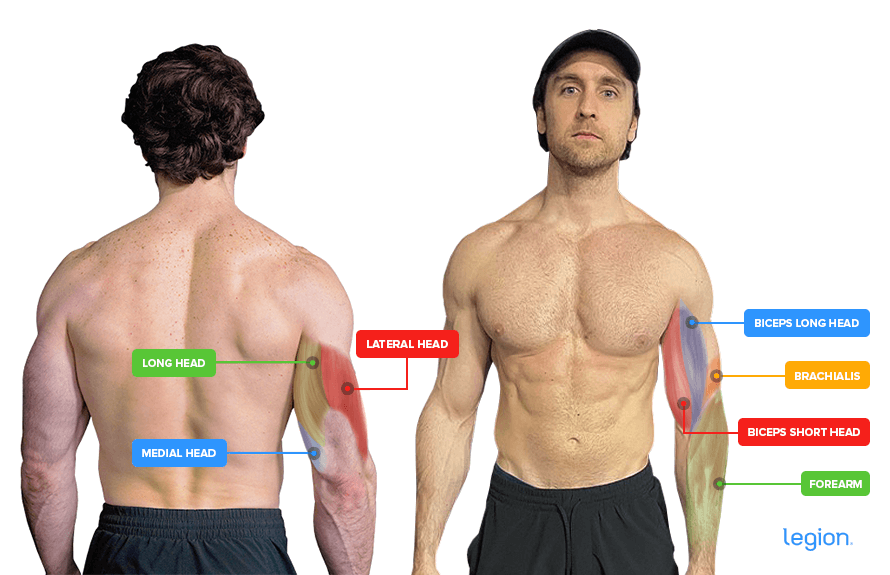
The arms contain several muscles that help bend and straighten the elbows, move the wrists, and grip objects.
The primary muscles include:
- Biceps brachii: Located at the front of the upper arm.
- Brachialis: A muscle underneath the biceps that helps bend the elbow.
- Triceps brachii: Located at the back of the upper arm and responsible for elbow extension.
- Forearms: A group of muscles involved in gripping and wrist movement.
Best Arm Exercises
- Dumbbell biceps curl
- Barbell curl
- Hammer curl
- Triceps pushdown
- Overhead triceps extension
- Close-grip push-up
- Wrist curls
Muscle Groups That Can Be Trained With Arms
Biceps are commonly trained with back because they assist during pulling exercises. Triceps are commonly trained with chest and shoulders because they assist during pushing movements.
You can also dedicate a separate session to arms if you have enough training days and recovery time.
7. Major Muscle Group #6: Core

Your core is made up of muscles around your midsection. These muscles help stabilize your trunk and transfer force between your upper and lower body.
Some of the main abdominal muscles include:
- Rectus abdominis: The muscles at the front of your abdomen.
- External obliques: Muscles along the outer sides of your abdomen.
- Internal obliques: Muscles beneath the external obliques.
Other muscles, including the transverse abdominis and deeper trunk muscles, also contribute to core stability.
Best Core Exercises
- Plank
- Side plank
- Reverse crunch
- Dead bug
- Hanging knee raise
- Cable crunch
- Pallof press
Muscle Groups That Can Be Trained With Core
Core exercises can be added to upper-body or lower-body sessions. They are also commonly included in push and pull workouts or performed in a short separate session.
8. How to Combine Muscle Groups in Your Workouts

There are several ways to organize muscle groups. Rather than searching for one perfect combination, choose a structure that matches your weekly availability and recovery needs.
Option 1: Push Muscles Together
A push workout groups muscles involved in pushing movements.
- Chest
- Shoulders
- Triceps
- Optional core exercises
This combination works because the triceps and front shoulders already assist during many chest and shoulder pressing exercises.
Option 2: Pull Muscles Together
A pull workout groups muscles involved in pulling movements.
- Back
- Biceps
- Rear shoulders
- Optional calves or core
The biceps and forearms assist during many back exercises, making this a practical combination.
Option 3: Train Upper Body Together
An upper-body workout includes exercises for the chest, back, shoulders, and arms. It can be useful when you train fewer days per week and want to work several muscle groups in one session.
Option 4: Dedicate a Day to Legs
A lower-body workout can include quadriceps, hamstrings, glutes, and calves. This allows you to focus on the major muscles of the lower body in one session.
Option 5: Add Core Training Throughout the Week
You do not necessarily need a separate abdominal day. You can add a small amount of core training to two or three workouts during the week.
9. The 5-Day Workout Schedule

A five-day routine can be useful for people who enjoy frequent training sessions and have enough time to recover between workouts.
The following schedule organizes the week around push, pull, upper-body, and lower-body training.
Weekly 5-Day Split
| Day | Workout Focus |
|---|---|
| Day 1 | Push |
| Day 2 | Pull & Calves |
| Day 3 | Upper Body & Core |
| Day 4 | Legs |
| Day 5 | Upper Body & Core |
| Day 6 | Rest |
| Day 7 | Rest |
What Does Each Day Include?
Day 1 – Push: Chest, shoulders, and triceps exercises.
Day 2 – Pull & Calves: Back, biceps, rear shoulders, and calf exercises.
Day 3 – Upper Body & Core: A balanced selection of upper-body exercises followed by core work.
Day 4 – Legs: Quadriceps, hamstrings, glutes, and calves if needed.
Day 5 – Upper Body & Core: Another upper-body session with exercises selected to complement the earlier workouts.
10. The 4-Day Workout Schedule

If five training days are difficult to fit into your week, a four-day split can provide a good balance between training and recovery.
Weekly 4-Day Split
| Day | Workout Focus |
|---|---|
| Day 1 | Push & Core |
| Day 2 | Pull & Calves |
| Day 3 | Rest |
| Day 4 | Upper Body & Core |
| Day 5 | Legs |
| Day 6 | Rest |
| Day 7 | Rest |
Why Choose a 4-Day Split?
- Provides four structured training sessions.
- Leaves several days for rest and recovery.
- Allows you to train different upper-body areas throughout the week.
- Can fit around work, study, and other responsibilities.
For many people, four well-planned workouts are enough to make consistent progress without needing to spend every weekday in the gym.
11. The 3-Day Workout Schedule

A three-day routine is a practical option for beginners, people with busy schedules, or anyone who prefers more recovery time between gym sessions.
Weekly 3-Day Split
| Day | Workout Focus |
|---|---|
| Day 1 | Push & Core |
| Day 2 | Pull & Calves |
| Day 3 | Legs |
| Other Days | Rest or light activity |
Why Choose a 3-Day Split?
- Requires fewer gym visits each week.
- Can be easier to maintain with a busy lifestyle.
- Provides recovery time between demanding sessions.
- Can help beginners develop a consistent exercise habit.
Although this schedule separates push, pull, and leg training, you can also use full-body workouts three times per week. The best choice depends on your goals and how much training volume you need.
12. How to Choose the Right Workout Split

Before choosing a schedule, consider how many days you can realistically train and how well you recover.
| Training Frequency | Possible Split | Best For |
|---|---|---|
| 3 Days | Push / Pull / Legs | Beginners and busy schedules |
| 4 Days | Push / Pull / Upper / Legs | Intermediate trainees and balanced schedules |
| 5 Days | Push / Pull / Upper / Legs / Upper | People with more training time |
These are examples rather than fixed prescriptions. A workout split should help you train your muscles consistently while managing fatigue and recovery.
13. Recovery and Workout Planning

Your muscles need more than exercise to grow stronger. Recovery, nutrition, sleep, and consistency all contribute to long-term progress.
Allow Enough Recovery Time
Try to avoid placing demanding sessions for the same muscle groups too close together if performance and recovery are being affected. The amount of recovery needed varies with training volume, intensity, and individual fitness.
Use Appropriate Training Volume
More exercises are not always better. Begin with a manageable number of sets and increase training volume gradually when you can recover well.
Prioritize Good Technique
Perform exercises through a controlled range of motion. Avoid increasing the weight at the expense of technique.
Eat Enough Protein and Calories
Muscle development requires adequate nutrition. Include protein-rich foods such as eggs, chicken, fish, dairy products, beans, and lentils in your diet.
Get Consistent Sleep
Good sleep supports recovery and helps you maintain energy for your training sessions.
Track Your Progress
Write down your exercises, sets, repetitions, and weights. This helps you monitor progress and make sensible adjustments.
14. Frequently Asked Questions

1. What muscle groups should I work out together?
Common combinations include chest, shoulders, and triceps for push workouts, and back, biceps, and rear shoulders for pull workouts. Legs can be trained separately, while core exercises can be added throughout the week.
2. Is it better to train chest and triceps together?
It is a popular combination because the triceps assist during many chest pressing exercises. Training them in the same session can make workout planning convenient.
3. Can I train back and biceps together?
Yes. The biceps assist during many pulling exercises, including rows and pulldowns. Back and biceps are therefore commonly trained together.
4. How many days per week should I work out?
Many people can make progress with three or four well-planned strength-training sessions per week. Five days can also work if you have enough time and can recover effectively.
5. Is a 3-day workout split enough to build muscle?
Yes. Three weekly sessions can support muscle development when the program includes appropriate exercises, training volume, progressive overload, and recovery.
6. Should I train abs every day?
No. Daily abdominal training is not necessary. You can include core exercises in two or three weekly sessions and allow recovery between demanding workouts.
7. Can beginners follow a 5-day workout split?
They can, but it is not usually necessary. Many beginners benefit from starting with fewer sessions and learning proper technique before increasing their training frequency.
8. What is the best workout split for women?
There is no single split that is best for all women. A three-day, four-day, or five-day routine can work. Choose the schedule that fits your goals, experience, availability, and recovery.
9. Can I train two muscle groups in one day?
Yes. Many effective workout plans combine multiple muscle groups in one session. The important factors are total training volume, exercise selection, and recovery.
10. Do I need a separate arm day?
Not necessarily. Your arms already work during many chest and back exercises. You can add a few direct biceps and triceps exercises to your push and pull sessions if needed.
Final Thoughts
Choosing which muscle groups to train together does not have to be complicated. Push workouts, pull workouts, upper-body sessions, and dedicated leg days are all practical ways to organize strength training.
If you are new to the gym, a three-day schedule may be a manageable starting point. If you have more time and recover well, a four-day or five-day routine may also suit your needs.
Focus on choosing exercises that match your goals, using good technique, gradually increasing your training challenge, and giving your body enough time to recover.
The best workout split is the one you can follow consistently while making steady progress.
Disclaimer: This article is for educational purposes only and is not a substitute for individualized medical or exercise advice. If you have an injury or medical condition that affects exercise, consult a qualified healthcare professional before starting a new training program.



0 Comments