
Girls Only Fitness • Science & Training

Is Increasing Strength Really the Best Way to Build Muscle?
Progressive overload is the foundation of muscle hypertrophy. While driving up strength on primary compound movements is the most reliable driver of muscle growth, execution and tension matter just as much as the weight on the bar. Below is the definitive guide to mastering the squat variations that drive maximum lower-body development.
1. How to Perform the Low-Bar Squat
The low-bar squat places the barbell lower on the back, shifting the center of gravity to maximize posterior chain engagement (glutes and hamstrings) while allowing you to move heavier weights.
- Position the rack pins at mid-chest level (roughly nipple height) and load the barbell. Grip the bar with palms facing forward, thumbs resting on top of the bar, and hands spaced three to six inches wider than shoulder-width apart.
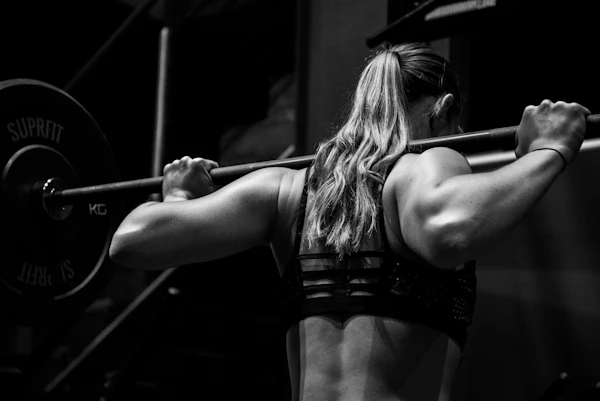
- Maintain your grip, step under the bar with feet shoulder-width apart, and place the bar across your mid-trapezius muscles directly over the shoulder blade spines. Pull your shoulder blades back and down to create a muscular shelf where the bar remains secure.
- Unrack the bar by extending your legs, take one step back with each foot, and set your stance to shoulder-width with toes turned out 20 to 25 degrees. Stand tall, inhale deeply into your stomach, and brace your core firmly.
- Initiate the descent by simultaneously breaking at the hips and knees, sitting down into the squat until your thighs pass parallel to the floor or as low as mobility comfortably allows.
- Drive upward through the mid-foot and heels to reverse the movement. Halfway up, drive your hips forward under the bar by contracting your glutes to finish in the starting position.
2. How to Perform the High-Bar Squat
The high-bar squat sits directly on the upper traps, promoting an upright torso position that emphasizes maximum quadriceps recruitment and deep knee flexion.
- Set the rack pins to mid-chest height and load your desired weight. Grip the bar with palms facing forward, thumbs wrapped around the bar, and hands positioned just outside shoulder-width.
- Step beneath the barbell with a shoulder-width stance, setting the bar across the top of your upper trapezius muscles near the base of the neck. Pull your shoulder blades down and back to seat the bar securely in the muscle channel.
- Unrack the weight and take one precise step back with each foot. Establish a shoulder-width stance with toes angled out 20 to 25 degrees, lift your chest, take an abdominal breath, and brace your midsection.
- Lower your body by bending your knees and pushing your hips back at the same time, descending straight down until your thighs are parallel to the floor or lower.
- Push firmly through your mid-foot and heels to drive the bar straight up. As you cross the midpoint, squeeze your glutes to bring your hips under the bar and return to full extension.
Expert Tips for Maximum Muscle Hypertrophy
- Prioritize Full Range of Motion: Lowering until your thighs are at least parallel to the floor recruits significantly more motor units in the glutes and quadriceps than partial reps.
- Control the Eccentric Phase: Lower the weight under control over 2–3 seconds rather than dropping quickly. Controlled mechanical tension under stretch is a primary driver of muscle growth.
- Brace with Intention: Expand your abdominal cavity with air before every rep to create intra-abdominal pressure, protecting your lower spine and increasing force production.
- Keep the Bar Path Vertical: Ensure the barbell stays tracked over your mid-foot throughout the entire movement to maximize balance and movement efficiency.
Weekly Hypertrophy & Strength Workout Routine
| Day / Focus | Exercise Selection | Sets x Reps | Target Zone |
|---|---|---|---|
| Day 1: Quad & Glute Focus | High-Bar Barbell Squat Romanian Deadlift Walking Lunges |
4 x 6-8 3 x 8-10 3 x 12/leg |
Quadriceps & Glute Max |
| Day 2: Upper Body Pull/Push | Dumbbell Shoulder Press Lat Pulldowns Push-Ups |
3 x 8-10 3 x 10-12 3 x Failure |
Deltoids, Lats, Chest |
| Day 3: Posterior Chain Focus | Low-Bar Barbell Squat Hip Thrusts Bulgarian Split Squats |
4 x 6-8 4 x 10-12 3 x 10/leg |
Glutes, Hamstrings, Quads |
| Day 4: Core & Conditioning | Hanging Leg Raises Cable Woodchoppers Plank Holds |
3 x 12-15 3 x 15/side 3 x 60 sec |
Abs, Obliques, Deep Core |
Frequently Asked Questions
Q: Is gaining strength mandatory for growing muscle?
Yes. While muscle can grow across various rep ranges, progressive overload—adding weight or reps over time—is the fundamental mechanical stimulus that forces muscle fibers to adapt and grow larger.
Q: Which squat variation is better for targeted glute growth?
The low-bar squat generally recruits more glute and hamstring involvement due to the greater forward torso lean and hip hinge angle compared to the high-bar position.
Q: Should I lift heavy weight low reps or light weight high reps?
For optimal hypertrophy, train primarily in the 6 to 12 rep range with challenging weights, ensuring you get close to technical failure while maintaining proper control.



0 Comments