
The Ultimate Leg Workout: The Best Leg Exercises for Bigger, Stronger Legs
A complete guide to leg anatomy, effective exercises, and building powerful, well-developed legs.
When people think about building an impressive physique, they often focus on their chest, shoulders, arms, and abs. But developing strong, muscular legs is just as important for creating a balanced and athletic body.
Your legs contain some of the largest and strongest muscles in your body. They help you walk, run, jump, squat, and perform countless everyday movements. Training them consistently can improve strength, stability, athletic performance, and overall muscle development.
However, an effective leg workout requires more than simply spending hours on machines or performing endless repetitions. You need the right combination of exercises, proper technique, progressive overload, and enough recovery.
In this guide, we'll explore the major muscles of the legs, explain the principles of effective leg training, and show you the best exercises for building bigger and stronger legs.
Table of Contents
1. Understanding the Anatomy of the Legs
Before choosing the best exercises, it helps to understand which muscles you are trying to develop. The major muscle groups of the legs include the quadriceps, hamstrings, glutes, and calves.
The Quadriceps
The quadriceps are a group of four muscles located at the front of your thighs. They play a major role in extending the knee and are heavily involved in squats, lunges, and many other lower-body movements.
The four quadriceps muscles are:
- Rectus femoris: Located toward the center of the front thigh. It helps extend the knee and flex the hip.
- Vastus lateralis: The large muscle on the outer part of the thigh.
- Vastus medialis: Located on the inner side of the thigh, close to the knee.
- Vastus intermedius: Positioned underneath the rectus femoris.
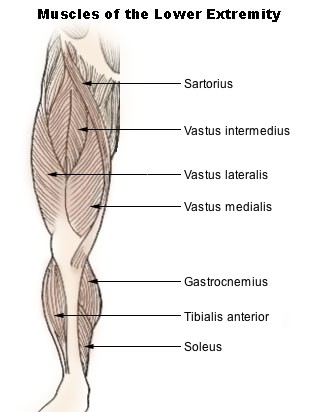
Developing the quadriceps contributes to fuller thighs and helps improve lower-body strength.
The Hamstrings
The hamstrings are located at the back of your thighs. They help bend the knee and extend the hip, making them important for movements such as running, hip hinging, and lifting objects from the floor.
The hamstrings consist of three muscles:
- Semitendinosus
- Semimembranosus
- Biceps femoris
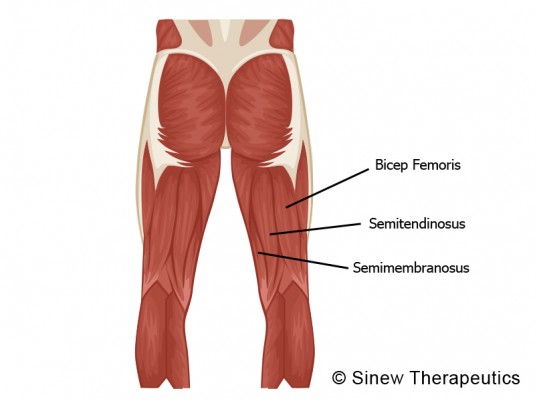
Strong hamstrings contribute to balanced leg development, knee function, and athletic performance.
The Gluteal Muscles
The glutes are located around the hips and buttocks. Although they are often discussed separately from the thigh muscles, they are essential to lower-body training.
The main gluteal muscles are:
- Gluteus maximus: The largest glute muscle, responsible for powerful hip extension.
- Gluteus medius: Helps stabilize the pelvis and move the leg outward.
- Gluteus minimus: A smaller muscle that supports hip movement and stability.
Squats, hip thrusts, lunges, and Romanian deadlifts can all contribute to glute development.
The Calves
The calves are located at the back of the lower leg. They help you point your toes, walk, run, and push off the ground.
They are mainly made up of two muscles:
- Gastrocnemius: The larger, visible calf muscle. It crosses both the knee and ankle joints.
- Soleus: Located underneath the gastrocnemius and plays an important role in ankle movement.
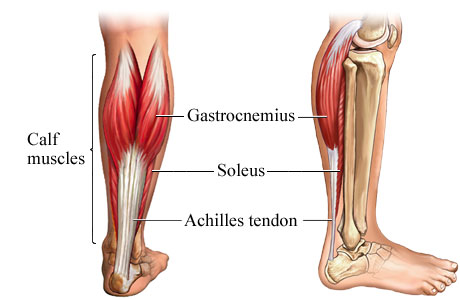
Training calves through different knee positions can help develop both muscles.
2. The Science of Effective Leg Training
Building bigger legs does not require complicated training methods. The most important factors are choosing effective exercises, using proper technique, training consistently, and gradually increasing the challenge placed on your muscles.
1. Prioritize Compound Exercises
Compound exercises involve multiple joints and muscle groups. They allow you to train large areas of the lower body efficiently.
Examples include:
- Squats
- Leg presses
- Lunges
- Romanian deadlifts
- Step-ups
These exercises should form the foundation of many leg training programs. Isolation exercises can then provide additional work for specific muscles.
2. Use Proper Range of Motion
Performing an exercise through a controlled, comfortable range of motion helps train the target muscles effectively.
For squats, this means lowering yourself as far as you can while maintaining good control, balance, and spinal position. Your ideal depth may depend on your mobility, body proportions, and training experience.
3. Train With Different Repetition Ranges
You do not need to use only heavy weights or only high repetitions to build muscle. Muscle growth can occur across a broad range of repetitions when sets are challenging enough and performed with good technique.
A practical approach is to use:
- 5–8 repetitions: Often useful for heavier strength-focused work.
- 8–12 repetitions: A convenient range for many compound and machine exercises.
- 12–20 repetitions: Useful for accessory exercises such as leg extensions and calf raises.
4. Apply Progressive Overload
For your muscles to keep adapting, your training needs to become gradually more challenging over time.
You can achieve progressive overload by:
- Increasing the weight when you can complete all planned repetitions comfortably.
- Performing more repetitions with the same weight.
- Improving your range of motion and exercise control.
- Adding a small amount of training volume when recovery allows.
Progress should be gradual. Increasing weights too quickly can compromise technique and increase the risk of injury.
3. The Best Leg Exercises for Bigger Wheels
Here are some of the most effective exercises for developing the quadriceps, hamstrings, glutes, and calves.
1. Barbell Squat
QuadricepsGlutesCoreThe squat is one of the most useful compound movements for developing lower-body strength and muscle. It trains the quadriceps and glutes while requiring your core and other muscles to stabilize your body.
How to perform it:
- Position the bar securely across your upper back.
- Stand with your feet approximately shoulder-width apart, adjusting your stance to what feels natural.
- Brace your core and keep your chest controlled.
- Bend your hips and knees to lower yourself.
- Descend as far as you can while maintaining balance and good technique.
- Push through your feet to return to the starting position.
Suggested sets and reps: 3 sets of 6–10 repetitions.
2. Leg Press
QuadricepsGlutesThe leg press is a machine-based exercise that allows you to train your quadriceps and glutes without needing to balance a barbell on your back.
How to perform it:
- Sit securely in the machine and place your feet on the platform.
- Keep your feet in a comfortable position around shoulder-width apart.
- Lower the platform slowly while keeping your hips and lower back supported.
- Stop before your pelvis begins to roll away from the seat.
- Push the platform away without forcefully locking your knees.
Suggested sets and reps: 3 sets of 8–12 repetitions.
3. Romanian Deadlift
HamstringsGlutesThe Romanian deadlift is an excellent hip-hinge exercise that emphasizes the hamstrings and glutes.
How to perform it:
- Hold a barbell or dumbbells in front of your thighs.
- Stand with your feet around hip-width apart.
- Keep a slight bend in your knees.
- Push your hips backward while lowering the weight close to your legs.
- Stop when you feel a strong hamstring stretch without rounding your back.
- Drive your hips forward to return to standing.
Suggested sets and reps: 3 sets of 8–12 repetitions.
4. Walking Lunges
QuadricepsGlutesBalanceLunges train each leg individually and can help improve balance, coordination, and lower-body strength.
How to perform it:
- Stand upright with your feet hip-width apart.
- Take a controlled step forward.
- Bend both knees to lower your body.
- Keep your front foot firmly on the floor.
- Push through the front leg and step forward with the opposite leg.
- Continue alternating sides.
Suggested sets and reps: 2–3 sets of 8–12 repetitions per leg.
5. Leg Extension
QuadricepsIsolationThe leg extension directly targets the quadriceps and is a useful accessory exercise after compound movements.
How to perform it:
- Adjust the machine so your knees align with its pivot point.
- Place your lower legs behind the padded bar.
- Extend your knees in a controlled movement.
- Pause briefly at the top.
- Lower the weight slowly.
Suggested sets and reps: 2–3 sets of 10–15 repetitions.
6. Lying or Seated Leg Curl
HamstringsIsolationLeg curls directly train the hamstrings by bending the knee. Seated and lying variations can both be useful.
How to perform it:
- Adjust the machine to fit your body.
- Position the pad securely against your lower legs.
- Curl your heels toward your body.
- Squeeze your hamstrings briefly.
- Return slowly without letting the weight drop.
Suggested sets and reps: 3 sets of 10–15 repetitions.
7. Standing Calf Raises
GastrocnemiusCalvesStanding calf raises emphasize the gastrocnemius and help develop the lower legs.
How to perform it:
- Stand on a calf raise machine or stable raised platform.
- Lower your heels under control to feel a comfortable stretch.
- Push through the balls of your feet.
- Raise your heels as high as comfortably possible.
- Pause briefly before lowering again.
Suggested sets and reps: 3 sets of 10–15 repetitions.
8. Seated Calf Raises
SoleusCalvesSeated calf raises train the soleus more directly because the knees remain bent during the movement.
How to perform it:
- Sit in the machine with your knees positioned under the pads.
- Place the balls of your feet on the platform.
- Lower your heels slowly.
- Raise your heels as high as possible without bouncing.
- Pause briefly and repeat.
Suggested sets and reps: 2–3 sets of 12–20 repetitions.
4. The Ultimate Leg Workout Routine
You can combine the exercises above into a balanced workout that trains the major muscles of your lower body.
| Exercise | Sets | Repetitions | Main Muscles |
|---|---|---|---|
| Barbell Squat | 3 | 6–10 | Quads, glutes |
| Romanian Deadlift | 3 | 8–12 | Hamstrings, glutes |
| Leg Press | 2 | 10–12 | Quads, glutes |
| Leg Curl | 3 | 10–15 | Hamstrings |
| Leg Extension | 2 | 12–15 | Quadriceps |
| Standing Calf Raise | 3 | 10–15 | Gastrocnemius |
| Seated Calf Raise | 2 | 12–20 | Soleus |
How Often Should You Train Legs?
For many people, training legs once or twice per week can work well. The best frequency depends on your experience, total training volume, schedule, and ability to recover.
If you train legs once weekly, you can complete the workout above in one session. If you prefer two sessions, you can divide the exercises into separate quadriceps-focused and posterior-chain-focused workouts.
5. How to Improve Your Leg Training Technique
Good technique helps you train the intended muscles while keeping movements controlled and repeatable.
Warm Up Before Heavy Sets
Begin with 5–10 minutes of light activity, followed by a few controlled movements that prepare your hips, knees, and ankles. Before your working sets, perform lighter warm-up sets of the main exercise.
Control Every Repetition
Avoid bouncing, rushing, or using momentum to move the weight. Lower the load under control and use a range of motion that you can maintain safely.
Keep Your Knees and Feet Stable
During squats and lunges, allow your knees to move naturally in the direction of your toes. Avoid letting them collapse inward uncontrollably.
Choose a Suitable Weight
If you cannot complete repetitions with proper technique, the weight may be too heavy. Reduce the load and build strength gradually.
6. How to Make Your Legs Grow
Building bigger legs takes time. The key is to provide enough training stimulus and support it with nutrition and recovery.
Train Consistently
Follow a structured routine rather than changing exercises randomly every week. Give yourself enough time to improve your technique and performance.
Track Your Progress
Write down the weight, repetitions, and sets you complete. This makes it easier to identify improvements and decide when to increase the difficulty.
Use Enough Training Volume
Your legs need sufficient challenging work to grow. However, doing more is not always better. Start with a manageable amount of training and increase it only when you are recovering well.
Be Patient
Muscle growth happens gradually. Changes in strength may appear before obvious visual changes, so focus on consistent training rather than expecting immediate results.
7. Common Leg Training Mistakes
1. Skipping Leg Day
Ignoring lower-body training can create an unbalanced routine and limit your overall strength development.
2. Using Too Much Weight
Lifting more weight than you can control often leads to poor technique. Choose a load that allows you to perform every repetition safely.
3. Ignoring the Hamstrings
Focusing only on quadriceps exercises can leave your training incomplete. Include hip-hinge movements and leg curls to train the back of your thighs.
4. Neglecting Calves
The calves are part of your lower body too. Include direct calf exercises if developing them is one of your goals.
5. Doing Too Much Too Soon
Suddenly increasing training volume or intensity can make recovery difficult. Progress gradually and pay attention to persistent pain or unusual fatigue.
6. Ignoring Recovery
Your muscles need time to adapt. Training hard every day without enough rest can reduce performance and make it harder to maintain a consistent routine.
8. Leg Recovery and Nutrition
Training stimulates muscle adaptation, but your body also needs sufficient food and rest to recover.
Eat Enough Protein
Protein provides amino acids that support muscle repair and growth. A useful general daily target for people who regularly train is around 1.4–2.0 grams per kilogram of body weight.
Good protein sources include:
- Eggs
- Chicken
- Fish and tuna
- Milk and yogurt
- Beans and lentils
Include Carbohydrates
Carbohydrates help provide energy for demanding leg workouts and replenish muscle glycogen. Rice, potatoes, oats, fruit, and bread can all fit into a balanced diet.
Drink Enough Water
Hydration supports normal body function and exercise performance. Drink regularly, especially during hot weather or sessions where you sweat heavily.
Get Enough Sleep
Aim for approximately 7–9 hours of sleep each night. Good sleep supports recovery, energy, and training consistency.
Frequently Asked Questions
1. What is the best exercise for building bigger legs?
Squats are an excellent compound exercise, but no single movement develops every leg muscle equally. A balanced routine should also include hamstring, glute, and calf exercises.
2. How many times per week should I train legs?
Many people make progress training legs once or twice per week. Choose a frequency that allows you to complete enough quality training while recovering properly.
3. Can I build leg muscle without squats?
Yes. Leg presses, split squats, lunges, step-ups, leg extensions, and other exercises can help develop your legs. Choose movements that suit your body and abilities.
4. How many repetitions are best for leg growth?
Muscle growth can occur across a wide range of repetitions. A combination of moderate and higher-repetition sets is practical for many leg workouts.
5. Why are my legs sore after training?
Muscle soreness can occur after unfamiliar or demanding exercise. It often improves over several days. Severe pain, swelling, or pain around a joint should not be treated as ordinary soreness.
6. How long does it take to build bigger legs?
It depends on training experience, genetics, nutrition, recovery, and consistency. Noticeable muscle development generally takes months rather than days or weeks.
7. Should I train calves on leg day?
Yes. Calf raises can be included at the end of your leg workout or on another training day, depending on your schedule and recovery.
Final Thoughts: Build Stronger Legs One Workout at a Time
Building impressive legs requires more than simply lifting heavy weights. You need a balanced approach that trains your quadriceps, hamstrings, glutes, and calves through effective movements.
Prioritize compound exercises, include useful isolation movements, use proper technique, and gradually increase your training challenge. Combine this with sufficient protein, carbohydrates, hydration, and sleep.
Most importantly, stay consistent. Stronger, more muscular legs are built through months of smart training and recovery.
Train with purpose, progress gradually, and never underestimate the importance of leg day!
Disclaimer: This article is for educational purposes only and is not a substitute for professional medical or exercise advice. Use appropriate equipment, learn correct exercise technique, and consult a qualified professional if you have an injury or medical condition.



0 Comments