
The 12 Best Barbell Row Variations for a Stronger, More Defined Back
Want to build a stronger back, improve your upper-body strength, and develop better pulling technique? Row exercises are an excellent way to train your back muscles. Discover 12 effective variations, learn how to perform them, and find the right options for your fitness level.
Workout focus: Back Strength · Muscle Building · Upper Body Training
Rowing exercises are among the most useful movements in strength training. They work several muscles at once, help develop upper-body strength, and can complement exercises such as squats, deadlifts, and chest presses.
The traditional barbell row is especially popular because it allows you to train with progressively heavier weights. However, it is not the only option. Different row variations can change your grip, body position, range of motion, and the amount of support your lower back needs.
In this guide, you will learn the benefits of rowing exercises, the muscles they train, how to perform a conventional barbell row, and 12 variations you can include in your training routine.
Table of Contents
1. What Is a Barbell Row?
The barbell row, also called the bent-over row, is a compound pulling exercise performed with a barbell. You bend forward at the hips, hold the bar with your arms extended, and pull it toward your torso.
The movement primarily trains the back muscles while your arms help complete the pull. Your core, glutes, hamstrings, and spinal erectors also work to stabilize your body during the exercise.

2. Benefits of Rowing Exercises
Build a Stronger Back
Rows train several upper-body muscles together, including the latissimus dorsi, trapezius, and rhomboids. Regular resistance training can help increase muscle strength and size over time.
Develop Upper-Body Strength
Strong pulling muscles support many other gym movements. Improving your rowing strength can help you build a more balanced upper-body training routine.
Support Better Posture
Strengthening the muscles around your upper back and shoulders can support better control of your shoulder blades. However, no single exercise can correct every posture problem. Good posture also involves movement habits, mobility, and overall strength.
Train Multiple Muscles at Once
Most row variations involve several muscle groups in one movement. This makes them useful exercises for people who want an efficient strength-training session.
Make Progressive Overload Easier
You can gradually increase the resistance, repetitions, or number of sets as your strength improves. Consistent progression is an important part of building muscle.
3. What Muscles Do Row Exercises Work?
Rowing exercises mainly target the muscles responsible for pulling your arms backward and controlling your shoulder blades.
- Latissimus dorsi (lats): The large muscles on the sides of your back.
- Trapezius: Muscles across your upper and middle back.
- Rhomboids: Muscles between your shoulder blades.
- Posterior deltoids: The rear portion of your shoulder muscles.
- Teres major: A muscle that assists shoulder extension and pulling.
- Erector spinae: Muscles that help maintain your spinal position.
Other muscles also contribute, including the biceps, brachialis, forearms, core, glutes, and hamstrings. The exact emphasis depends on the variation, grip, and body position.
4. How to Do a Barbell Row Correctly
Before trying heavier weights, learn the basic movement with a light bar or manageable resistance.
Step 1: Set Up
- Stand with your feet approximately hip- to shoulder-width apart.
- Hold the bar with an overhand grip, slightly wider than shoulder-width if comfortable.
- Bend your knees slightly.
- Push your hips backward and lean your torso forward.
- Keep your spine neutral and brace your abdominal muscles.
- Allow the bar to hang beneath your shoulders.
Step 2: Pull the Bar
- Pull the bar toward your lower ribs or upper abdomen.
- Lead the movement with your elbows.
- Keep your torso stable instead of swinging backward.
- Briefly squeeze your back muscles at the top.
Step 3: Lower the Bar
- Lower the bar under control.
- Allow your arms to extend without losing your neutral back position.
- Repeat for your planned number of repetitions.
5. The 12 Best Row Variations
These 12 exercises offer different ways to train your back. Some use a barbell, while others use dumbbells, cables, or machines. Choose variations according to your equipment, experience, and comfort.
1. Conventional Bent-Over Barbell Row
Equipment: Barbell and weight plates.
How to: Hold the bar with an overhand grip. Hinge forward at the hips, keep your knees slightly bent, and brace your core. Pull the bar toward your lower ribs, then lower it under control.
Why try it: This classic variation is useful for developing overall back strength and learning a fundamental horizontal pulling movement.
Suggested sets and reps: 3 sets of 8–12 repetitions.
2. Pendlay Row

Equipment: Barbell and weight plates.
How to: Set your torso close to parallel with the floor. Grip the bar, brace your core, and pull it toward your torso. Lower it back to the floor and allow it to settle before beginning the next repetition.
Why try it: Resetting the bar between repetitions reduces continuous momentum and encourages a controlled start for every pull.
Suggested sets and reps: 3 sets of 6–10 repetitions.
3. Yates Row (Underhand Barbell Row)

Equipment: Barbell and weight plates.
How to: Hold the bar with your palms facing forward in an underhand grip. Hinge at the hips, maintain a stable spine, and pull the bar toward your abdomen. Lower it smoothly.
Why try it: The underhand grip changes the pulling position and may allow the biceps to contribute more. Use a comfortable range of motion and avoid forcing your wrists or shoulders.
Suggested sets and reps: 3 sets of 8–12 repetitions.
4. One-Arm Dumbbell Row
Equipment: Dumbbell and bench.
How to: Place one hand and the same-side knee on a bench. Keep your back neutral and hold a dumbbell in the opposite hand. Pull the weight toward your hip, then lower it slowly. Complete your repetitions before switching sides.
Why try it: Training one arm at a time helps you work each side independently and identify differences in strength or control.
Suggested sets and reps: 3 sets of 10–12 repetitions per arm.
5. Seated Cable Row
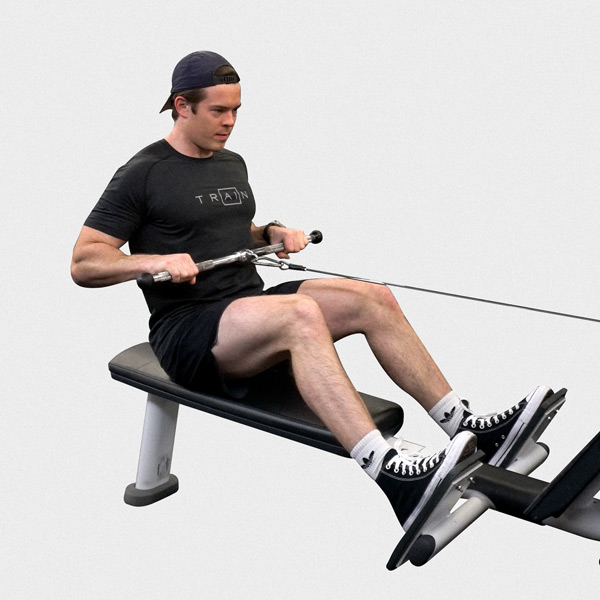
Equipment: Cable machine and handle attachment.
How to: Sit with your feet supported and knees slightly bent. Hold the handle, sit tall, and pull it toward your abdomen. Keep your torso steady and extend your arms slowly on the return.
Why try it: The cable provides resistance throughout much of the movement and makes it easy to adjust the load.
Suggested sets and reps: 3 sets of 10–15 repetitions.
6. T-Bar Row
Equipment: T-bar row machine.
How to: Stand on the footplate, position your body according to the machine design, and hold the handles. Pull them toward your torso while keeping your chest supported if the machine has a pad. Return slowly.
Why try it: Many T-bar machines offer neutral-grip handles, which some people find more comfortable for their wrists and shoulders.
Suggested sets and reps: 3 sets of 8–12 repetitions.
7. Barbell Corner Row (Landmine Row)
Equipment: Barbell, weight plates, and a secure landmine attachment.
How to: Secure one end of the bar in a landmine attachment. Load the other end, stand over the bar, and hold the handle or sleeve. Hinge at the hips and pull the weighted end toward your torso.
Why try it: The angled bar path creates a different pulling direction from a conventional barbell row. It can be a useful option for home or gym training when the equipment is available.
Suggested sets and reps: 3 sets of 8–12 repetitions.
8. Barbell Seal Row
Equipment: Seal row bench and barbell.
How to: Lie face down on a stable elevated bench that allows the bar to move freely underneath. Grip the bar and pull it toward the underside of the bench. Lower it under control.
Why try it: Chest support reduces the need to hold a bent-over position, allowing you to focus more directly on the pulling movement.
Suggested sets and reps: 3 sets of 8–12 repetitions.
9. Helms Row
Equipment: Incline bench and two dumbbells.
How to: Set an incline bench to a comfortable angle. Lie chest-down with a dumbbell in each hand and let your arms hang. Pull both dumbbells toward your sides, then lower them slowly.
Why try it: The chest-supported position limits body swinging and allows you to train both sides of your back together.
Suggested sets and reps: 3 sets of 10–12 repetitions.
10. Chest-Supported Dumbbell Row
Equipment: Incline bench and dumbbells.
How to: Set an incline bench at a moderate angle. Lie face down with your chest supported and feet stable. Pull the dumbbells toward your hips or lower ribs, then return to the starting position.
Why try it: Supporting your chest reduces the demand on your lower back and helps you concentrate on the back muscles.
Suggested sets and reps: 3 sets of 10–15 repetitions.
11. Machine Row
Equipment: Seated row machine.
How to: Adjust the seat and chest pad to fit your body. Hold the handles, keep your chest supported if applicable, and pull your elbows backward. Return slowly without allowing the weight stack to crash.
Why try it: A machine can provide stability and make it easier to train your back when you are tired or learning the movement.
Suggested sets and reps: 3 sets of 10–15 repetitions.
12. Inverted Row and Barbell Dead Row
Equipment: A secure rack and barbell for inverted rows; a barbell for dead rows.
Inverted Row
Set a bar securely in a rack at an appropriate height. Lie underneath it, hold the bar, and keep your body in a straight line. Pull your chest toward the bar, then lower yourself with control. Bend your knees to make the movement easier.
Why try it: You can adjust the difficulty by changing the bar height or bending your knees. It is a useful bodyweight pulling exercise.
Barbell Dead Row
Hold a barbell with an overhand grip and hinge forward. Pull the bar toward your lower ribs or abdomen, then lower it to the starting position. Pause briefly between repetitions while keeping your torso stable.
Why try it: The pause helps you reset your position and avoid rushing from one repetition into the next.
Suggested sets and reps: Inverted row: 3 sets of 8–12. Dead row: 3 sets of 8–10.
6. Common Rowing Mistakes to Avoid
Using Too Much Weight
Excessive weight often causes swinging, shortened repetitions, and loss of control. Choose a load that lets you maintain good technique.
Rounding Your Back
Keep your spine in a comfortable neutral position. Avoid allowing your lower back to collapse during the movement.
Using Momentum
Do not throw your torso backward to lift the bar. Your back and arm muscles should perform the pulling movement while your body remains stable.
Pulling Only With Your Hands
Think about driving your elbows backward rather than simply curling the weight with your hands. This can help you focus on the intended pulling muscles.
Ignoring the Lowering Phase
Do not let the weight drop uncontrollably. Return it with enough control to maintain your position and prepare for the next repetition.
7. Sample Back Workout Using Row Variations
You do not need to perform all 12 exercises in one session. Choose a few movements that complement each other and match your training level.
| Exercise | Sets | Reps |
|---|---|---|
| Conventional Barbell Row | 3 | 8–10 |
| Seated Cable Row | 3 | 10–12 |
| One-Arm Dumbbell Row | 3 | 10 each arm |
| Inverted Row | 2 | 8–12 |
Rest: Take approximately 90–120 seconds between challenging sets, and longer if needed to recover your technique.
8. How to Progress With Row Exercises
- Master the technique: Learn the movement with a manageable weight before increasing resistance.
- Add repetitions: Gradually work toward the upper end of your chosen repetition range.
- Increase weight gradually: When all your sets feel controlled, add a small amount of resistance.
- Track your workouts: Record your exercises, weights, sets, and repetitions.
- Allow recovery: Give your muscles enough time to recover between demanding sessions.
Consistency is more important than lifting the heaviest weight in the gym. A well-controlled workout repeated over time can produce better results than constantly changing exercises or rushing to increase the load.
9. Frequently Asked Questions
1. What is the best row variation for building back muscle?
There is no single best variation for everyone. Conventional barbell rows, chest-supported rows, dumbbell rows, and cable rows can all be effective when performed consistently with appropriate resistance.
2. Are barbell rows good for women?
Yes. Barbell rows are suitable for women who can perform them comfortably and safely. The exercise can help develop back strength and support balanced upper-body training.
3. Can beginners do barbell rows?
Yes, but beginners should start with light resistance and learn the hip-hinge position first. Chest-supported rows and seated cable rows can also be useful starting options.
4. How many times a week should I train my back?
Many people train their back one or two times per week. The ideal frequency depends on your total training volume, experience, recovery, and other exercises in your routine.
5. Do rows help improve posture?
Rows strengthen muscles involved in shoulder-blade control and upper-back movement. They can contribute to a balanced exercise routine, but posture also depends on daily habits, mobility, and other factors.
6. Which row variation is easier on the lower back?
Chest-supported rows and many seated machine rows reduce the need to hold a bent-over position. They may be more comfortable for some people, although individual needs and injuries differ.
7. Should I use an overhand or underhand grip?
Both grips can work. An overhand grip is common for conventional rows, while an underhand grip changes the position of the arms and may increase biceps involvement. Choose the grip that feels comfortable and allows good control.
8. Can I build a strong back without a barbell?
Absolutely. Dumbbell rows, cable rows, machine rows, and inverted rows can all help develop back strength without using a barbell.
Final Thoughts
Row exercises are valuable tools for building a stronger and more capable upper body. The 12 variations in this guide offer different ways to challenge your back, from traditional barbell movements to supported, cable, machine, and bodyweight exercises.
You do not need to perform every variation. Choose two or three exercises that suit your equipment and experience, focus on proper technique, and gradually progress as your strength improves.
Remember: Good form, consistency, recovery, and patience are the foundations of long-term fitness progress.
Disclaimer: This article is for educational purposes only and is not a substitute for individualized medical or professional exercise advice. If you have back, shoulder, or other joint pain, consult a qualified healthcare professional before starting or changing your training routine. Stop any exercise that causes sharp or unusual pain.



0 Comments